
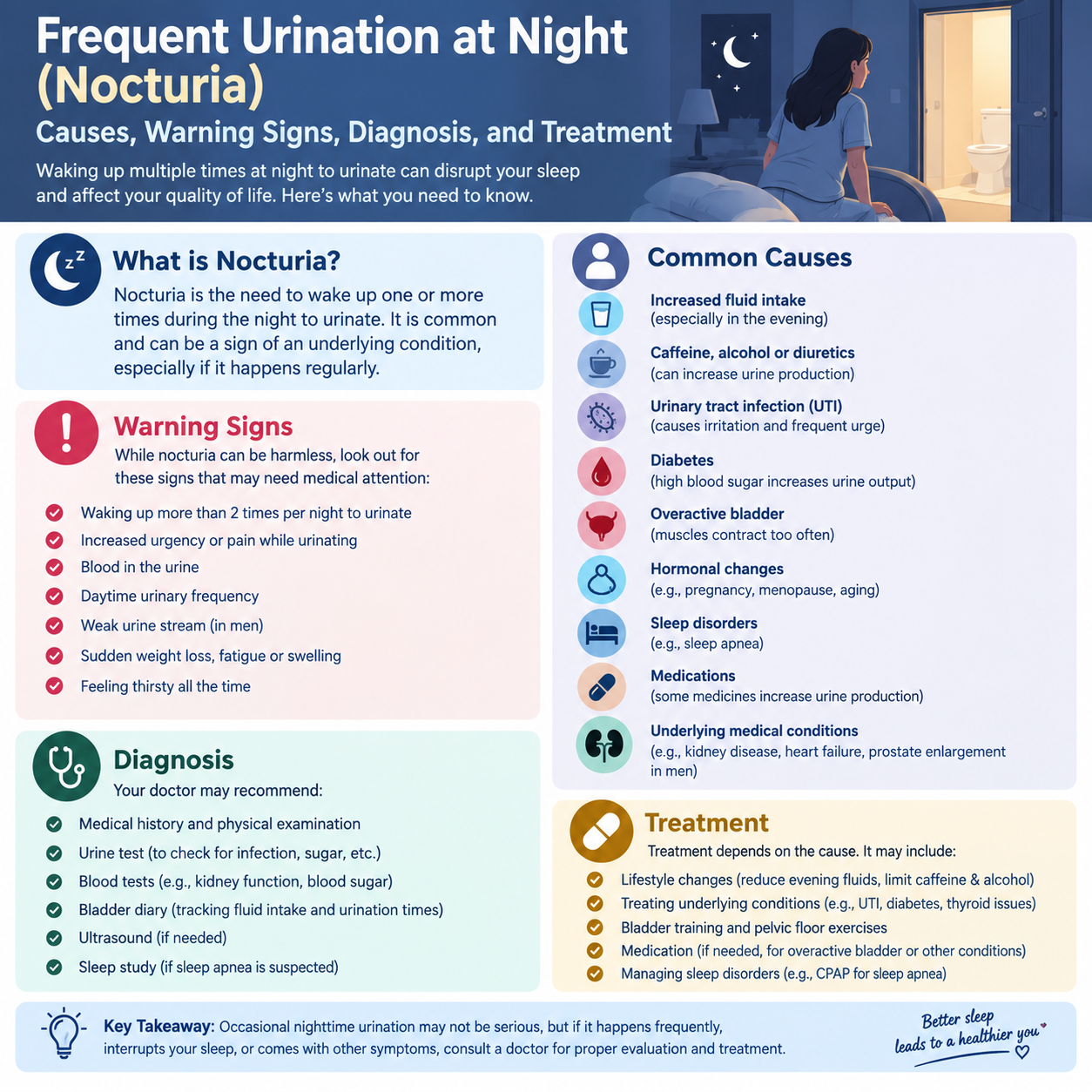
Frequent Urination at Night (Nocturia), Causes, Warning Signs, Diagnosis, and Treatment
Most people have to get up to go to the bathroom once in a while and don't care. It's a different story when you wake up two or three times a night. Sleep is not continuous, mornings may feel rather heavy, and it is blamed on age or the additional cup of tea.
Nocturia is defined by having to urinate more than a few times a night by physicians, and it is not a simple inconvenience. It may refer to a bladder issue, a hormonal problem, a heart or kidney disease or a sleep disorder unrelated to the bladder. Understanding what is causing it is the key to living a happy, healthy life with a good night's sleep or getting out of bed.
What Counts as Nocturia
Nocturia is defined as urinating during sleep. Waking up once is very common and not necessarily an issue, especially in adults. Doctors are more likely to worry if it occurs two or more times each night because that's when sleep and daily functioning begin to suffer.
It's more common in older adults, but younger adults and women of any age also report it, and it's the result of different factors.
Why It Happens
Often, nocturia is not a simple issue. Most experts divide it into a few mechanisms, and many individuals have more than one, simultaneously.
The Body Makes Too Much Urine at Night
This is the most common cause, and it is called nocturnal polyuria. Normally the body slows urine production during sleep. In some individuals it doesn't, and in older adults as many as a third of the urine excreted during the day is produced during the night. Some causes of swollen ankles are related to fluid building up in the legs during the day and being able to shift back into the bloodstream when an individual lies down, which is why swollen ankles and nighttime urination frequently occur at the same time. This can be caused by heart failure, kidney disease, and unmanaged diabetes.
The Bladder Holds Too Little
If the bladder does not have enough space to hold urine, it may be due to an overactive bladder or an enlarged prostate. Bladder stones, infection, and inflammation do the same. In such cases, the total output of urine may be normal but does come in small amounts and quickly.
Sleep Gets Interrupted First
In some instances, it is not the bladder itself; that is the culprit. Insomniacs and OSA get up from sleep, and when they are awake, they realize they need to go to the bathroom. Sleep apnea can also alter the hormonal messages which affect urine output. If a person snores heavily and wakes feeling unrefreshed, then he may have a sleep disorder, and it may appear like a bladder issue.
Habits and Medicines
The easiest to miss are evening fluids, as well as caffeine and alcohol. Late evening water pills can also stimulate urination to the night. These factors are easily modifiable, but these should be taken into consideration before changing the timing of any prescribed medication, and a doctor should be involved.
Warning Signs That Should Not Wait
While getting up to pee doesn't necessarily mean a serious problem, some qualities make a trip to the doctor's office soon advisable. Blood in urine, trouble or burning urination, fever, weak or interrupted stream and leakage all are on that list. Extreme thirst along with weight loss, or large amounts of urine all day long, can point to diabetes. If legs are swollen or shortness of breath when lying flat, further investigation of the heart and kidney is indicated. It's important to not ignore a sudden change in a stable pattern.
How Doctors Find the Cause
The discussion is typically the initial part. A doctor will ask how many times the person is awakened to use the bathroom, what they drink and when, what medications they are taking and at what time, and if they sleep well. A physical examination is done after this and in the case of men, a prostate check is frequently included.
The best thing you can do is a bladder diary. The person keeps a record for approximately three days of what he or she consumes, when he or she urinates, and how much urinates. This indicates if the bladder empties with a large amount of urine in one night or if it empties in small amounts. Treatment is dependent on the type of those the diary points out.
Treatment Options
Habit Changes That Help
Usual initial steps are to cut back on fluids in the two or three hours prior to bedtime, avoiding evening caffeine and alcohol, and voiding the bladder just before retiring to sleep. If the ankles swell in the evening, try propping the legs up for an hour or two in the late afternoon, so the fluid is pushed back out of the swelling tissues before you go to bed at night and it's processed while you sleep.
Treating the Underlying Condition
If another condition is the cause of nocturia, treating the other condition will usually be more effective than treating the bladder. Reducing urine volume can be accomplished through improved blood sugar control. For many, using a CPAP machine to treat sleep apnea decreases the number of times they need to get up at night. Control of heart or kidney disease helps to reduce nighttime fluid movements.
Medicines
Medicines for overactive bladder and prostate medicine are available to relieve symptoms that are caused by a bladder or enlarged prostate gland. If the doctor notices the diaper has a high volume of urine in it during the night, he may prescribe desmopressin, a medication that decreases urine production. It is not recommended for all people. It may cause sodium levels to fall to unsafe levels, so physicians don't use it in people with heart failure or severe kidney disease and keep a close eye on sodium levels when they do prescribe it.
Why It Is Worth Taking Seriously
The stress of fragmented sleep can take a toll. Those affected by nocturia may be tired in the day, find it difficult to focus and may be low in mood. One additional risk is for older adults, as walking to the bathroom in the dark while sleeping increases the risk of falling and if a fall does occur, can cause fractures. A night light that has an unobstructed way to the bathroom helps reduce the risk while the cause is being determined.
FAQs
1. How many times a night is too much for urination?
Waking up once is not rare and is frequently acceptable. Two or more times per night is when doctors begin to question the cause, largely since this is when sleep and daytime energy levels start to be affected.
2. Does reducing water intake help solve the issue?
Drinking less in the evening helps, but it would not be advisable to drink so little throughout the day. High concentrations of urine in the bladder can irritate the organ and increase the chances of infection. Fluids spread at an earlier time of the day to work better.
3. Is frequent urination at night a sign of diabetes?
It can be accompanied by heavy overnight urination, weight loss, and thirst. High blood sugar causes excess water to be removed from the body through urine. A simple blood sugar test can settle the question.
4. What is the reason for nocturia occurrence in men and women?
In men, an enlarged prostate is a common factor which contributes to it. More commonly, in women, overactive bladder, pelvic floor changes, and hormonal changes after menopause are factors. Both are impacted by fluid shifts and sleep issues.