
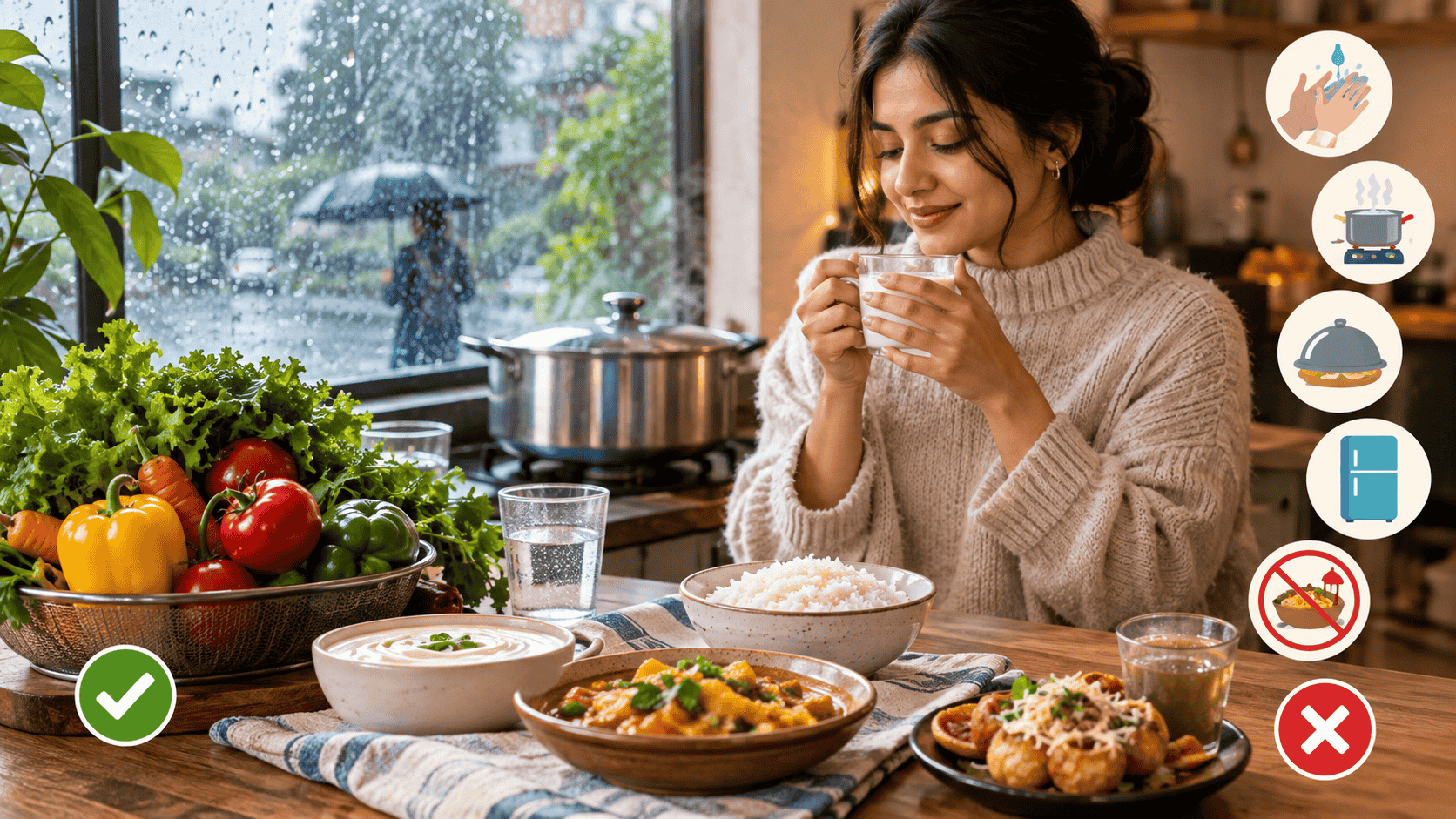
Monsoon Food Safety, How to Avoid Food Poisoning and Stomach Infections During the Rainy Season
At the hospitals and clinics, the same thing happens each year when the first big rain comes. Cramps, vomiting, and diarrhea appear spontaneously in patients. Trace it back a step or two, and it's usually something eaten or drunk a day or so earlier. Bacteria, viruses, and parasites thrive in warm temperatures, high humidity, and when the water supply is affected.
The standard halachic response is “be careful with food,” but that doesn't really explain a lot. There are some measures that reduce the risk. Others are repeated so many times that they have become more of a myth than a protection, so it's best to clear up the misconceptions before the monsoon arrives.
Why the Rainy Season Raises the Risk
Bacteria That Thrive in Warm, Damp Conditions
Most of the organisms that cause food poisoning grow best in warm, moist conditions, and monsoon weather provide them with a perfect setting. Humid conditions cause food to reach unsafe bacterial levels much quicker than cooler months when food is left out at room temperature. Once the weather becomes humid, cooked rice absorbs moisture, which leads to an increase in the number of bacteria, and dairy dishes and gravies quickly become dangerous.
Water Supplies Become Less Reliable
When it rains, the rain is likely to contaminate the municipal water through certain run-off, sewage overflow, and broken pipelines. Cholera, typhoid and hepatitis A have been observed to increase in parts of India during the monsoon season and is primarily transmitted through water or by contact with water-contaminated materials, often through food. Water may be clear and taste good and still contain pathogens that could be unknown if not tested.
What's Actually Behind These Infections
A few different organisms tend to be responsible, and they don't all work the same way.
Salmonella and E. coli — the most common culprits. Diarrhea, cramping and fever typically occur 1-3 days after consuming undercooked food, produce not washed thoroughly, or water that has been contaminated.
Vibrio cholerae — the bacterium behind cholera. Spreads via sewage contaminated water and can be very dehydrating if not diagnosed early.
Hepatitis A — slower to show up. Jaundice and fatigue may not be noticeable for weeks that have passed; it's easy to forget what it's caused by.
Giardia – typically linked to raw vegetables and unfiltered water. Symptoms can drag on for a week or more without treatment.These have been found to have overlapping early symptoms, making it difficult to know if it's a simple stomach upset or the beginning of a bigger problem.
Identifying the difference between a mild and serious symptom
Most of the food poisoning caused by the monsoon passes within 24 to 48 hours without any treatment other than rest and fluids. The upset stomach, light diarrhea, and slight stomach discomfort are uncomfortable, but not usually hazardous.
If these all appear, a visit to the doctor becomes the right thing to do:
Blood or mucus in the stool A fever above 102°F that won't respond to medication
A dry mouth, dizziness when standing up or significantly reduced urination.
Vomiting bad enough that fluids won't stay down for several hours
No improvement whatsoever after 3 full days.
Dehydration can happen quickly when there is a delay in seeking assistance, particularly with infants or the elderly. An easily treatable stomach bug can escalate to a trip to the hospital if fluid replacement isn't started early enough.
Constructive Prevention Strategies that Make a Difference
Treat Your Water as a Variable, not a Given
The first and best remedy for anyone suffering from monsoon disease is to boil water for at least a minute or use a filter that has been well-maintained. This isn't just for drinking water either; it applies to water used for cooking and washing produce too. Constantly overlooked, it's easy to see how ice can be a source of contamination from unboiled tap water.
Be Selective About Street Food and Raw Produce
Street food isn't necessarily unsafe, but monsoon weather makes for an additional risk. Perishable foods remain at unsafe temperatures for longer, and it is hard to see how the water used to prepare the food was handled. All raw salads, cut fruit left in the sun, and chutneys with unboiled water are exposed to the same type of danger. Don't eliminate these foods but be more selective during these months.
Don't Let Leftovers Sit Around
People treat the two-hour rule like it's optional. It isn't, not once the air gets thick with humidity. Curry, dal, rice, anything sitting on the counter past that window is doing exactly what bacteria want it to do, which is multiply somewhere warm and moist with nobody watching. Refrigerate it, don't just cover it and hope for the best. And when it comes back out, heat it properly. A lukewarm reheat might make food taste fine while doing nothing about the toxins some bacteria have already left behind, ones that don't care how hot your microwave gets on the "quick warm" setting.
The Basics Still Work
Rinse hands before eating the food and after using the washroom is as simple as it can be, but it's the type of thing people neglect during the monsoon season. Cleaning off kitchen surfaces and washing produce under a running stream of water, even peeled produce, reduces the number of bacteria that can be spread to other foods in the kitchen.
Some People Can't Afford to Wait and See
Infants, older adults, pregnant women and people with compromised immune systems or digestive problems are at a higher risk of experiencing problems if they have a mild infection in themselves. Children lose water at twice the rate they are aware of. Pregnancy also poses risks, however, and listeriosis is one of them. If an adult is feeling those symptoms, he or she typically shouldn't bother getting checked; those symptoms are more likely to be temporary and resolved at home for these groups.
What Helps at Home
Trying to stop every symptom at once is the wrong goal with a mild stomach bug. Dehydration is the actual threat, not the diarrhea itself. Sip an oral rehydration solution slowly across the day, not in one go, since that does more for replacing lost fluids and electrolytes than water alone ever will.
Keep meals boring for a few days. Rice, khichdi, banana, plain toast, none of it exciting, but all of it easy on a stomach that's already unhappy. Spicy or fried food will only aggravate things further, and dairy tends to sit better once symptoms have actually eased off rather than while they're still active.
FAQs
1. Is home-cooked food safe during monsoon if it's kept in the fridge?
Generally, yes, the fridge does its job here. What trips people up is skipping the reheat step because the food "just came out of the fridge." Give it a proper heat-through, and don't stretch leftovers for the past two or three days no matter how good your fridge is.
2. Does boiling water really get rid of waterborne illness risk?
A full rolling boil for a minute takes out pretty much everything you'd worry about, bacteria, viruses, the usual parasites. It's honestly one of the few pieces of health advice that's both simple and actually backed by results.
3. How long does monsoon food poisoning usually stick around?
For most people, it's a rough one to three days and then it passes on its own with rest and enough fluids. If day four rolls around and things are still bad, or worse than before, that's not a "wait it out" situation anymore.
4. Why do kids get hit harder by this than adults?
Two things working against them, really. Their bodies lose fluid faster relative to their size, and they don't have the same reserves an adult body does. So what looks like a mild stomach bug in an adult can turn serious in a child a lot quicker than most parents expect.